
The weave is the way a bracelet's links are joined, and it is the weave that decides its character, visual weight and how it drapes on the wrist. Before you look at size, it helps to know whether you want something light and fluid or one strong accent, because that question settles most of the choice. Below we explain the three main types of weave, the difference between solid gold and a hollow piece, and how to match the form to your style and care for it.
What determines the character of a bracelet?
Two things decide a bracelet's character: the pattern of the weave and whether it is made of solid gold. The weave sets whether the bracelet is delicate and fluid or compact and bold, and how it catches the light as you move your hand. Solid gold decides whether the form lasts for years or deforms after a few months. Only the combination of the right weave with solid gold gives a bracelet that looks good and keeps its shape. That is why it is worth starting the choice with these two questions, not with the first impression in a display case.
How does a chain link differ from a dense weave?
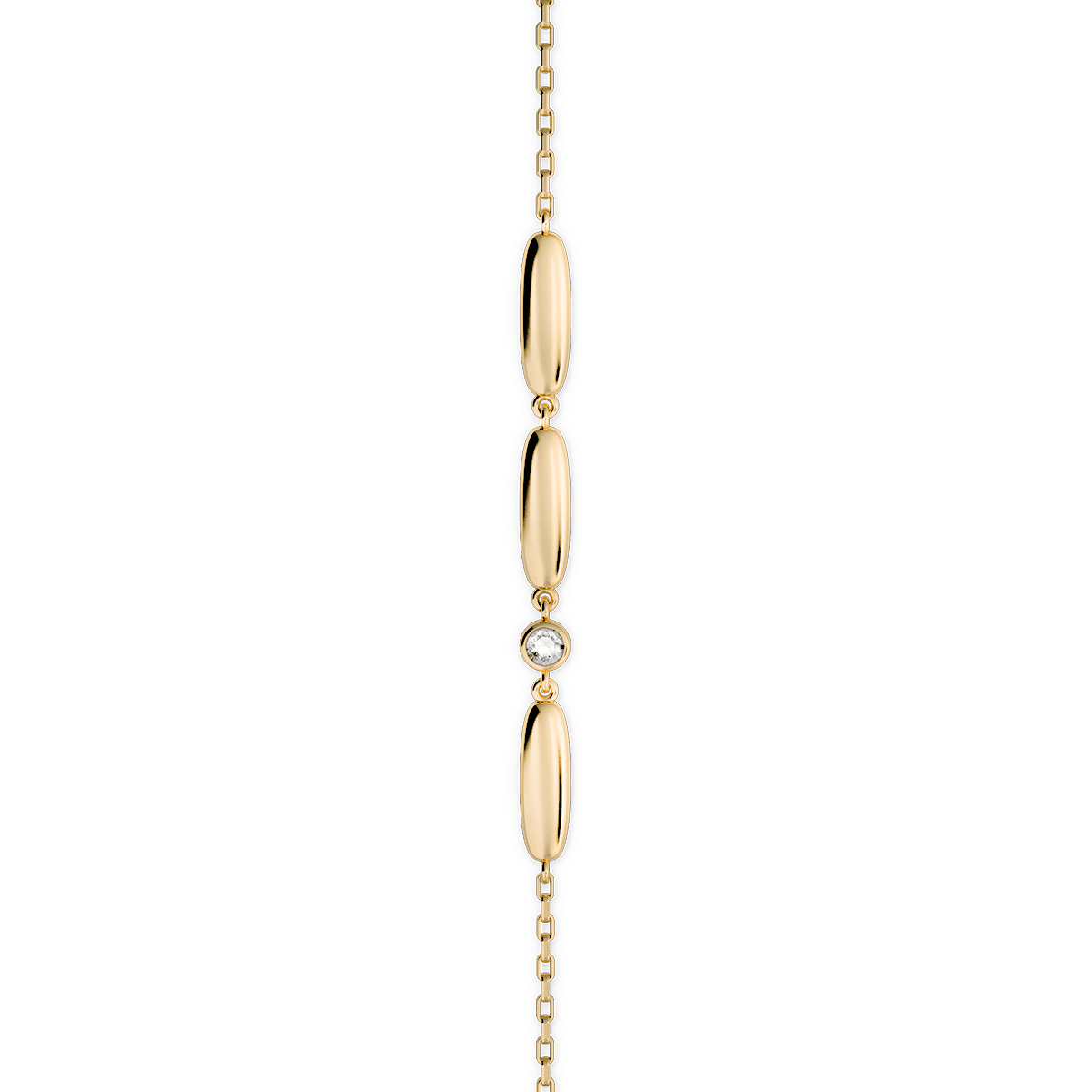
A chain link is made of single, loosely joined links, so the bracelet is light, fluid and catches the light with every gesture. In a dense weave the links sit closer together, so the bracelet is more compact, has a clearer pattern and is enough on its own for the wrist. In practice you choose a chain link when you like layers and want to pair the bracelet with a watch, and a dense weave when you want one standalone piece. Chain links are also more comfortable under a sleeve because they drape better, while a dense weave states its presence more firmly. The difference comes down to whether you prefer subtlety or resolve.
When should you choose a rigid bangle?
Choose a rigid bangle when you want one clear accent that keeps its round shape regardless of movement. Unlike a weave, which drapes softly on the wrist, a bangle has a fixed form and goes on over the hand or on a hinge, so its fit needs to be more precise. Our rigid bangles are hardened, which means the metal springs back rather than bending out of shape, so the form does not flatten in daily wear. It is a good choice if you wear a simple, modern wardrobe and prefer one bold element to several small ones. A bangle looks best on its own or with a clearly more subtle form, so they do not compete for attention.
Why does solid gold hold its shape better than a hollow piece?
A solid gold bracelet holds its shape because there is solid gold inside, not air. A hollow piece, empty in the middle, is lighter and cheaper to produce, but it dents more easily and rarely returns to its original shape once crushed. With weaves this matters concretely: a hollow link cracks at the bend, a solid one withstands daily fastening and rubbing against a cuff. We make our bracelets by hand from solid gold in our own atelier in Warsaw, so the pattern of the weave stays clear and the bracelet has a noble weight you feel from the first wear. You can read more about the number stamped near the clasp in our article on gold alloys.
How do the Minimal, Round and Raw lines differ?
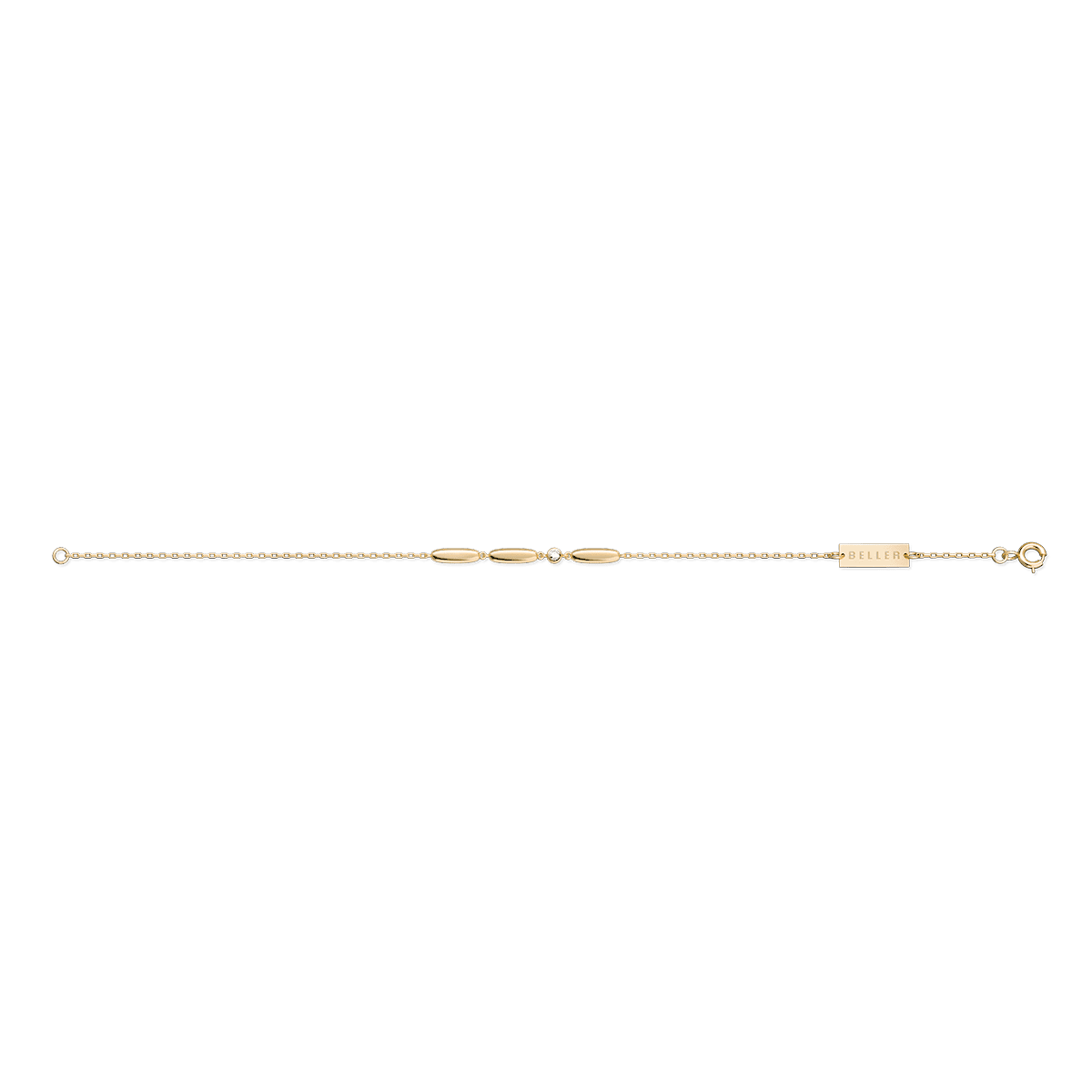
Our three lines are three different weave patterns, so choosing between them is a choice of aesthetic, not only of model. Minimal means smooth, quiet links with a clean line, for those who prefer jewellery to be a backdrop rather than the main point. Round is built on soft, rounded shapes, warmer to the eye and easier to wear every day. Raw has a rawer, more textured pattern with the visible hand of the maker and a deliberate irregularity, for those who want a strong character. We make each line in white, yellow and rose gold, so the aesthetic can be matched to your complexion.
How do you match the weave to your style and the occasion?
Match the weave to how often and on what occasions you intend to wear the bracelet. A delicate chain link works every day, because it is light, does not get in the way at work and fits under a shirt cuff. A dense weave and a rigid bangle suit situations where jewellery is meant to be a visible element, for instance in the evening or with more formal attire. If you want one purchase to serve many occasions, choose one delicate and one bold form that can be worn separately or together. Such a pair gives more combinations than two bracelets of similar character.
How do you wear several bracelets at once?
Combine bracelets on contrast, pairing forms of different thickness and texture, for instance a thin weave with a watch or one bold link. The rule is that one form leads and the rest accompany it, because two equally strong bracelets side by side start to compete. You can mix gold colours deliberately: yellow, white and rose come from the same family and work well together, which lets you wear pieces from different sets at once. Leave a little space between bracelets so each stays legible rather than merging into one mass. In a stack rhythm and restraint matter, not the number of pieces on the wrist.
How do you personalise and care for a bracelet?
You personalise a bracelet with engraving, which we include free with every order, adding a date, an initial or a word on a tag or the inside of a link. In daily use, take it off before training and tasks where it strikes hard surfaces, as that is the most common cause of scratches. Gold dulls over time from contact with cosmetics, which is why we offer free refreshing and polishing that restores the weave's shine. If the clasp starts to loosen, bring the bracelet to the boutique early, before a loose link comes apart. This aftercare is part of what an authored atelier means, not a paid extra.
Explore the BELLER gold bracelets collection and choose the weave that suits your style. If you want to compare the weight and pattern of the weaves in person, visit our boutique in Kraków or in Warsaw.